Site Map

Karmapa News

The April 6-8 teaching in New Delhi has been postponed for another date, it will announced as it becomes available.


RECENT ACTIVITIES OF HIS HOLINESS KARMAPA

Gyalwang Karmapa attends conference on 'Buddhism and World Peace'

2 May,2012 - Dharamsala

The Gyalwang Karmapa along with Indresh Kumar, a prominent Rashtriya Swayamsevak Sangha(RSS) leader and Gyari Dolma, Home Minister of the Central Tibetan Administration attended a daylong programme on Buddhism ,World Peace and Danger on Himalaya "Bodh Dharma - Vishva Shanti " organised by the Himalaya Pariwar (Himachal Pradesh) in lower Dharamshala town hall.

Kalon Gyari Dolma briefed the gathering on the ongoing critical situation inside Tibet and appealed for continued support from the delegates for the Tibetan cause.

The RSS leader Indresh Kumar said Tibet was never a part of China and denounced the ongoing violation of basic human rights inside Tibet.

His Holiness Gyalwang Karmpa, in his address noted the same culture that Tibetans and Indians in the Himalayan regions have historically shared.

"Both Indian Himalayans and Tibetans are part of the great Himalayas and historically we have shared a good relationship," Karmapa said.

"Since Tibet lost its independence, the Dalai Lama and along with him many Tibetan took refuge here in the Himalayan state of Himachal Pradesh, which has kindly hosted exile Tibetan administration and been the second home for many Tibetans and also become a platform where we preserve our culture and tradition, i hope this deep and holy relationship lasts for centuries to come " Gyalwang Karmapa said while acknowledging the hospitality of the state.

Vice Chancellor of the Himachal Pradesh University, A. D. N. Bajpai, and heads of local Tibetan NGOs also attended the daylong congregation.

The Himalaya Pariwar is a regional grassroot organisation aimed at helping the people in the Himalayan Region to overcome the challenges of communalism, regionalism, poverty and unemployment.


Back to top

Gyalwang Karmapa opens new library at Gyuto Monastery

18 April,2012 - Dharamsala

At a special ceremony this morning, the 17th Karmapa Ogyen Trinley Dorje officially opened Gyuto Monastery's new library and presented certificates to four monks who had successfully completed their studies for the degree of Geshe Ngakrampa.

Samdhong Rinpoche, former Prime Minister of the Tibetan Central Administration, Tulku Tenzin Jampa Choesang Rinpoche, the Abbot of Gyuto Monastery, and Mr Pema Choejor, Minister for Religious Affairs, all attended the ceremony.

In a short address, Gyalwang Karmapa referred back to comments His Holiness the Dalai Lama had made during the recent Kalachakra teachings in Bodhgaya. The Dalai Lama had chided his followers for always asking him to give Buddhist teachings but never taking the initiative themselves to study the Buddha's teachings directly from the old books of the Tibetan Buddhist canon (the Kangyur and Tengyur), which sat gathering dust on the shelves of Tibetan libraries. Surveying the newly-finished library, the Karmapa wryly admitted that he too sometimes shared this view.

After the conclusion of the ceremony, Gyuto Monastery offered all the guests a specially prepared lunch.


Back to top

"Turn your worries into strength," Gyalwang Karmapa tells students

16 April,2012 - Dharamsala

His Holiness Gyalwang Karmapa visited the Tibetan Transit School (TTS) in Dharamsala, northern India, on April 16. He inaugurated a giant mani prayer wheel and addressed staff and students.

Speaking at the Tibetan Transit School His Holiness urged the students to turn their "home sickness, worries, and sadness" into strength through hard work and dedication.

"We all are same," Gyalwang Karmapa told the students, who are recent arrivals from Tibet. "We all came from Tibet. We all have worries, sadness and maybe same aim too. I can understand you all well."

"You have to turn your worries into your strength. You have to focus on your long term goals and study hard," the Tibetan spiritual leader said.

Referring to the ongoing wave of self-immolations in Tibet, Gyalwang Karmapa asserted that Tibetans, in addition to understanding the situation in Tibet, should also understand the global situation.

"Since 2008, protests in Tibet have been going on and many have burned themselves in protest against the Chinese government," Gyalwang Karmapa said.

"Without understanding the whole situation of the world; economic, political and military, actions arising only out of a surge in emotions will not work."

The giant prayer wheel constructed by the students in honour of the 34 Tibetans who have set themselves on fire demanding the return of His Holiness the Dalai Lama from exile and freedom in Tibet.

This was the Gyalwang Karmapa's third visit to the school.


Back to top

Supplication for the swift return of Kyabje Tenga Rinpoche composed by gyalwang karmapa

5 April,2012

Back to top

The Gyalwang Karmapa Gave a talk at the Root Institute

14 March, Bodhgaya

I am very happy to be at the Root Institute once again and I am delighted to see everyone come here to listen to the dharma with such faith and devotion. I have come to the Root Institute many times and every time I get a very warm welcome and I would like to thank you all very much for this. I did not make any particular preparations for what I am going to say today, nor am I quite sure what I should say to you, but perhaps I will share my feelings about the Kadampa Lineage.

When we talk about the Kadampa Lineage, we are referring to the lineage of those who are able to engage in the entire thought of the Buddha, and all of the Buddha's speech without leaving anything out and to bring all of that onto the path to enlightenment. And this is a particular feature of the Kadampa lineage. So within their presentation of the Buddha's teachings, their discussion of the three types of individuals, and so forth, what I think is most important for our time is the example they set of being able to practice and understand all the Buddha's teachings, and to be able to take them onto the path. I think this is the most important and impressive thing about the Kadampa Lineage.

It is also a way of practicing where you do not have any bias between the different philosophical schools or between the different vehicles of Buddhism. Sometimes there is some bias between the levels of the Mahayana and the Foundation Vehicle, but the difference between these is actually nothing other than differences in the capacities of our own minds. It is a question of the extent of our resolve, or the amount of responsibility or burden that we are able to take upon ourselves. Even if we belong to the family of the Mahayana, in order to be able to really develop the capacity of our minds, then in the Kadampa tradition, we would start by studying the teachings of the sravakas and the pratyekabuddhas without casting any of it away.

Read Full Report

Back to top

The Alms Procession

This year, for the first time, the ceremony was not held at the Mahabodhi stupa but transferred to Tergar Monastery and the Monlam Pavilion. It was also brought forward to six o'clock in the morning. The procession replicates the alms round from the time of Lord Buddha, a tradition which survives still today in some countries.  Buddhist monks and nuns set out each morning with their bowls to collect whatever food is given them by the villagers or townspeople.

By 5.15am the first laypeople had already begun lining up along the route, guided by Kagyu Monlam volunteers, easily recognized by their emerald green volunteer vests. The alms round is conducted in silence so people were encouraged to chant the refuge prayer.  After Mahayana sojong at the Monlam Pavilion, the monks and nuns gathered in the shrine room at Tergar Monastery and the round could begin.  A monk bearing incense headed the procession. He was followed by H.E. Gyaltsap Rinpoche, Khenpo Dönyö and Ringu Tulku bearing metal staffs topped with rings that jingled: traditionally the noise warns animals away. Behind them came thegelong in order of seniority, and finally the gelongma.

The procession wound its way round Tergar Monastery, out through the gates, along the road and into the Monlam Pavilion, where the monks and nuns resumed their seat and continued the morning session's Twenty Branch Monlam prayers. The Gyalwang Karmapa did not take part, but watched from the terraced roof of his quarters.


Back to top

The Kangyur Procession at the Mahabodhi Stupa

For five days this year's Monlam had been held at the Monlam Pavilion, two kilometers from Bodhgaya, so it felt strange on the sixth day to be in Bodhgaya, standing at the entrance to the Mahabodhi stupa grounds at five o'clock in the morning once more.  Strange, but also very comfortable, like coming home. This ancient site radiates a pervasive feeling of sacredness, as if the broken stones themselves are a repository for two thousand years of devotion, hope, and trust in the way of the Buddha. Sitting under the bodhi tree, waiting for the Gyalwang Karmapa to arrive, people commented that they missed being at the stupa. However, for once, laypeople were able to sit where the novice monks and nuns would have been sitting, closer to the shrine, His Holiness and the bodhi tree, rather than crowded into the margins, hidden behind monuments, or perched precariously on the grass banks.  Perhaps they had forgotten the advantages of the pavilion, where everyone is included and can have a clear view of what is happening, albeit from a distance.

Most of the ordained sangha were at the Monlam Pavilion where Khenpo Donyo was giving sojong and then leading a  Medicine Buddha puja. Only the 103 fully ordained monks and nuns  taking part in the procession had come to the stupa. For once the assembly was composed mainly of laypeople.

Read Full Report


Back to top

Karma Pakshi and a Jataka tale : A play with dance and a Tibetan opera

3 March, 2012 Bodhgaya

On the evening of March third, the Monlam stage with its huge altar was transformed by the presence of four tall pillars arrayed across the front of the stage. In deep brown decorated in gold filigree, topped by lotus flowers, they supported the four animals—a tiger, garuda, vulture, and snow lion—that appeared to Milarepa in his famous dream. The four represent the main disciples of Marpa the Translator, through whom the Kamtshang lineage flows. In front of the stage, the rows of seats in the Pavilion are filled right up to the back while three screens on either side bring into the evening darkness the radiant and warm colors of the stage.

This is the setting for tonight's play based on the life of the Second Karmapa, Karma Pakshi (1206-1283). Written by the Gyalwang Karmapa in a contemporary idiom, the drama focuses on three events: the arrival of Orgyenpa (1230-1312), who would hold the Karma Pakshi's lineage; the meeting of these two great lamas; and finally, Orgyenpa's meeting and recognizing the Third Karmapa, Rangjung Dorje (1284-1339). During the time of the Seventh Karmapa, such dramas, based on the lives of buddhas, bodhisattvas, and other realized beings, were performed during the first fifteen days of the New Year, commemorating the time when the Buddha performed his great miracles. At Tsurphu, (the Karmapa's main seat in Tibet), the custom was to practice the Twenty-Branch Monlam in the morning and present these dramas in the afternoon.

Read Full Report


Back to top

The 29th Kagyu Monlam: Day Eight

8 March, 2012 Bodhgaya

Long Life Ceremony for the Two Lords of Refuge, Tai Situ Rinpoche and Goshir Gyaltsap Rinpoche

On March 8, the Gyalwang Karmapa and the sangha gathered to offer a long life ceremony celebrating two of his heart sons, the Twelfth Tai Situ Rinpoche and the Twelfth Goshir Gyaltsap Rinpoche. As the dawn begins to color the edge of the sky, a huge crowd has filled the Monlam Pavilion and a special excitement runs through the air. Today will be the culmination of the eight days of prayers for peace in the world and in the hearts of all beings. Through the long life ceremony this morning, the merit of this year's gathering is especially dedicated to the long lives of these two great lamas. The Gyalwang Karmapa has explained that what is positive in this life and throughout all our lives comes from our teachers, our spiritual friends. It is of utmost importance that they keep guiding us and awaken us from the sleep of our ignorance. We have protection and guidance now because they are with us, so we must continually ask them to live long and continually pray that their wishes be fulfilled....

Kagyu Monlam hosts a celebratory lunch

Following the long-life offerings to H.E. Kenting Tai Situpa and H.E. Gyaltsap Rinpoche, there was a special buffet lunch in the shrine room at Tergar Monastery for invited guests only.

Gyalwang Karmapa, Jamgon Kongtrul Rinpoche and Gyaltsap Rinpoche headed the lunch; at their table, a   chair and place were set symbolically for Situ Rinpoche.

Other guests included  rinpoches, three year retreat lamas, khenpos,  chötrimpas, and  umzes from the Kagyu monasteries at the Monlam, as well as representative from each of the nunneries, the labrangs of Tai Situpa and Gyaltsap Rinpoche, and lay sponsors. The buffet was prepared by the same team who had been cooking for the sangha, and entertainment was  provided by students from TCV Suja, who performed  traditional Tibetan songs and dance with youthful vigour.

The highlight of the function was the presentation of a facsimile of a rare text to all Kagyu monasteries and nunneries.  No one had known about the existence of this text, a commentary on the Six Yogas of Naropa by the Fourth Gyaltsap Rinpoche,Dragpa Dundrub (1550-1617), until a handwritten copy from Mongolia was offered to the Seventeenth  Gyalwang Karmapa.  Thought to be the only surviving copy, His Holiness  then presented  it to Gyaltsap Rinpoche.

Read Full Report


Back to top

The 29th Kagyu Monlam: Day Seven

7 March, 2012 Bodhgaya

Sojong and the alms procession

5.30am and at the Monlam Pavilion, H.E.Jamgon Kongtrul Rinpoche was giving the Mahayana sojong vows. Meanwhile, at Tergar Monastery 500 metres away,  there was noisy bustle as laypeople arrived with their food offerings to find a good place on the circuit for the alms procession.


The Akshobhya Ritual at the Monlam Pavilion

After the alms procession, and the Twenty Branch Monlam, the  main focus of the day's prayers at  the Monlam Pavilion was the Akshobhya Ritual.

Usually only ordained sangha  are involved in these prayers, although laypeople  attend the sessions.  Monks and nuns  performed  the  Akshobhya Self-Visualization,  the  Akshobhya Mandala Ritual, and the Reading the Akshobhya Sutra.

The theme of purification concluded with the recitation of the Dharani Sutra.


The Akshobhya Purification Ritual and Fire Ceremony

This year, the Akshobhya retreatants have returned to offer the Akshobhya Purification Ritual every evening during the final six days of Monlam, before offering the final purification ritual and fire puja on the evening of the 7th day, which is March 7, 2012.

Before and during the Monlam, the organizers have been collecting donations to make prayers for the deceased and those living who are in great difficulty. The Akshobhya fire ceremony is seen as having a special power to help those who had died and are in the intermediate state of bardo.

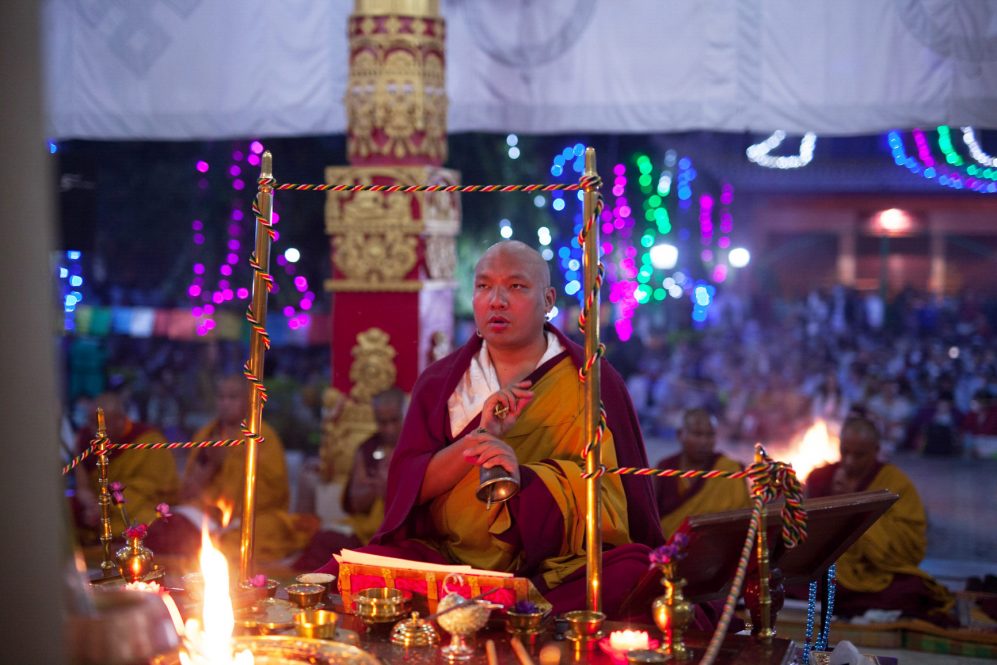
His Holiness the 17th Karmapa performed the Akshobhya fire ceremony on the evening of the March 7, the penultimate evening of the Kagyu Monlam. Also present were the Akshobhya retreatants.

Read Full Report


Back to top

The 29th Kagyu Monlam: Day Six

6 March, 2012 Bodhgaya

The main events today centred around the Kangyur, the Tibetan collection of sutras or the written record of the words of the Buddha. This is covered in a separate feature.

Novice monks and nuns did not go to the Mahabodhi stupa. The Mahayana sojong vows  at the Monlam Pavilion were given by Khenpo Dönyö.  While the Kangyur procession was under way at the stupa,  those at the pavilion recited the Menlha (Medicine Buddha ritual).

Session Three: Prayers for the well-being of Tibet

The current troubles in Tibet mean that this year's Monlam prayers for the well-being of Tibet have taken on an urgency and great significance.  Each year, His Holiness unfailingly attends this session. The  prayers in this section were written mostly by His Holiness the Fourteenth  Dalai Lama.

There must have been very many heavy hearts amongst the monks and nuns as they recited them, especially those whose families are still in Tibet.  Pilgrims arriving from Tibet have brought with them stories of the suffering there.

The Gyalwang Karmapa himself, in recent public statements, has hinted that the situation in Tibet, of self-immolations and increasing crackdowns and repression by the Chinese authorities, weighs heavily on him.

This is what he said in a statement in February, made in Bodhgaya:

As tensions escalate, instead of showing concern and trying to understand the causes of the situation, the Chinese authorities respond with increasing force and oppression. Each new report of a Tibetan death brings me immense pain and sadness; three in a single day is more than the heart can bear. I pray that these sacrifices have not been in vain, but will yield a change in policy that will bring our Tibetan brothers and sisters relief.

Having been given the name Karmapa, I belong to a 900 year old reincarnation lineage that has historically avoided any political engagement, a tradition I have no intention of changing. And yet as a Tibetan, I have great sympathy and affection for the Tibetan people and I have great misgivings about remaining silent while they are in pain. Their welfare is my greatest concern.

  As he recited the prayers, the webcast camera caught him grim-faced, staring steadfastly ahead.

I am sure that within this new great encampment, those  aware of the tragic  situation in Tibet, were praying from the depths of their hearts.  

Rehearsals at the Monlam Stage

Early evening, the Gyalwang Karmapa went to the Monlam Pavilion to supervise the reorganization of the stage and rehearsals for two upcoming events: the Long Life Offerings to  H.E. Tai Situ Rinpoche and H.E. Gyaltsap Rinpoche, and the Marme Monlam. Both will be held on the eighth and final day of this year's Monlam. The rehearsals continued long into the night.


Back to top

The 29th Kagyu Monlam: Day Five

5 March, 2012 Bodhgaya

Once more the day at the Monlam Pavilion began early at 5.30am.

The webcast team was in their places, ready to start broadcasting as Jamgon Kongtrul Rinpoche commenced the Mahayana Sojong vows. He sat on a cushion facing the assembly and read the vow-taking ritual from a sheet of paper, monks, nuns and laypeople repeating the vows after him.

Dawn broke slowly over the fields of baked earth relieved by clumps of rough grass that surround the pavilion. Prayers from the Mahabodhi stupa 2Km away, broadcast by loudspeaker over the countryside at maximum volume could be all too clearly heard.

  The chanting master asked everyone to kneel, and began to recite the refuge vows in Sanskrit; in the background, a chorus of grey mynah birds gained strength.

Gyalwang Karmapa joined the puja after the short break for breakfast, for the chanting of the Twenty Branch Monlam.    

Akshobya and Amitabha Empowerments

His Holiness Gyalwang Karmapa bestowed Akshobhya and Amitabha empowerments on March 5, 2012. Gyalwang Karmapa arrived at the Monlam Pavilion around 9:00 am. After prostrating three times he sat on the throne and put on his black activity hat. After a mandala offering at around 9:15 am, His Holiness gave a brief talk on the history of Buddha Akshobhya.

A picture of Buddha Akshobhya (known as Mitrukpa in Tibetan), a copy of the one painted by His Holiness in 2011, was distributed to all those in attendance. His Holiness told how there was once a bhikku who promised that he would never be angry and not feel hatred to anybody until he reached enlightenment. Buddha then predicted that this bhikku would be called Akshobhya, or unmoving, or that which cannot be disturbed.

Read Full Report


Back to top

The 29th Kagyu Monlam: Day Four

4 March, 2012 Bodhgaya

This morning began with another first.  H.E. the Fourth Jamgon Kongtrul Lodrö Chökyi Nyima gave the Mahayana Sojong vows to those gathered before dawn at the Monlam Pavilion for the very first time. The surrounding fields resounded with the chattering of waking birds, as, in a deep voice, reminiscent of the Gyalwang Karmapa, the sixteen year old led the congregation for the first time.

Significantly, this Monlam, Jamgon Kongtrul Rinpoche has assumed a more prominent role. Earlier, he was in evidence at each session of the Gutor Mahakala Puja, supporting the vajra master Gyaltsap Rinpoche. In addition he gave a short teaching on Calling the Lama from Afar and led the Subduing the Ground vajra dance.

Born in Central Tibet on November 26, 1995, Rinpoche was located  in the summer of 1996 by a search party following instructions given by the 17th Gyalwang Karmapa. During this Monlam, His Holiness commented how, of all the recognitions of trulkus he made while he was in Tibet, this was the one he experienced most strongly and clearly.  Jamgon Kongtrul Rinpoche travelled to India in 1997 and now lives at the monastery established by the previous Jamgon Kongtrul in Lava, West Bengal.  

Gyalwang Karmapa's teachings on the pure realms to the East and West —Day 4

At the Monlam Pavilion on the morning of March 4, the Gyalwang Karmapa continued his teaching on the purelands. After he takes his seat on the throne, tea and biscuits are offered to everyone while the aspirations and names of the sponsors are read out by the discipline master.

Read Full Report


Back to top

The 29th Kagyu Monlam: Day three - Gyalwang Karmapa's teachings on the pure realms to the East and West

3 March, 2012 Bodhgaya

According to science, this earth is the only planet where all of the positive conditions exist for human life. So to have all the conditions necessary for life is very rare. And human beings have a special quality that other beings lack: we are able to distinguish right from wrong. Many species of living beings have become extinct, but among those that exist, humans are the most intelligent because they have the capacity for ethical or moral discernment, knowing which actions are positive and which are negative. It is not just a matter of gain and loss in the short term; we can also comprehend what is beneficial in the long term. But even though we have this capacity, so far we have not used it very well. We tend to only look at what is good for ourselves in the short term, but we do not look closely enough at what is best for everyone in the long run. On top of that, for our own benefit or that of our immediate communities, we mistreat other groups of beings and create a lot of damage and loss of life. In this way, because of negative human activities, many beings have been killed and have become extinct.

And in the same way, all the problems in the environment are due to the mistakes of human beings. In one way, there has been vast technological and material development, making it easy to communicate and travel. But in another way, we are living in degenerate times. By this I mean that natural and traditional ways of doing things are being replaced by all kinds of artificial or made-up methods.

Because of this, human beings have arrived at a time when we really need to think deeply. We have all kinds of ease and assets in our environment, creating the right kind of conditions to practice dharma. And these conditions not only facilitate dharma practice, but also enable us to engage in positive actions. Thus we need to use our great capacity for intelligence to understand how to act in ways that are the most beneficial for ourselves and for others. If we can do that, then this precious human life will become useful and fruitful.

Read Full Report


Back to top

The 29th Kagyu Monlam: Day two - Mahayana Sojong Vows

2 March, 2012 Bodhgaya

At the close of the first day, the chief chötrimpa (disciplinarian) gently chided some of the monks for being late for the first session of the Monlam. Today, everyone was on time.

The session began with Gyaltsap Rinpoche bestowing the Mahayana Sojong vows, proceeded on to the refuge prayers in Sanskrit, and then on to the Twenty Branch Monlam. The Gyalwang Karmapa  attended the second session of the Monlam but not the other sessions. He worked busily in his quarters with preparations and audiences. He also visited the Nyingma Monastery and dropped in on the gelong and gelongma who eat lunch in the shrine room at Tergar Monastery. In the evening he went to the Monlam Pavilion to supervise the final rehearsal for the evening performance of "Karma Pakshi" on the 3rd March.  

Gyalwang Karmapa's teachings on the pure realms to the East and West

—Day 2  

March 2, 2012, underneath the blue arch of the Monlam Pavilion, the Gyalwang Karmapa continued to teach on the pureland of Sukhavati (Dewachen). Yesterday, he talked about who could be born  there, and after looking at various aspects of the question, he concluded that anyone who could engage their mind in virtuous actions could take rebirth in Sukhavati. Today he explained the purpose and particular benefits of being born in this pureland. Among these are avoiding the experience of the lower realms and the feeling of suffering, whether physical or mental, for this is a place (or level of realization) where we do not need to experience suffering or its origins. Instead, every day we will witness a festival of miracles. Further, in every lifetime until we become enlightened, we will attain all the leisures and resources. The most important benefit, however, is that the conditions obstructing liberation and omniscience are fewer and those that support attainment are greater.

What are these opposing inner conditions on a physical level? The body degenerates and grows old, experiences disease and weakness. The elements decline; eventually our life force fades away; and finally we die. While alive, we are poor and destitute and busy with maintaining a place to stay, food, and health. These experiences do not exist in Sukhavati. Mentally, the opposing conditions are mainly grasping on to the self of an individual and the self of phenomena on a coarse level. This has become manifest as having a great fixation on our place, our body, and objects we own. In brief, our self, this "I," is greatly favored; we think about it almost constantly.

Further, we have the wrong view that disparages karma cause and effect, and we also have the thought to harm others. The afflictions, such as aversion and excessive desire, have come to the surface. Due to our ignorance, we do not know others' minds, or the higher perceptions, and so forth.  All these negative conditions, which are coarse, manifest, and mostly mental, do not exist in Sukhavati.

Read Full Report


Back to top

The 29th Kagyu Monlam: Day One - Mahayana Sojong Vows

1 March, 2012 Bodhgaya

The sounds of auto rickshaws reverberated through Bodhgaya in the wee hours of March 1st, 2012 as monks, nuns and laypeople made their way to Tergar Monastery to attend the first day of the eight-day Kagyu Monlam prayer festival, and to receive Mahayana Sojong vows. Sojong vows taken for the benefit of all beings are called Mahayana sojong vows.

The Tibetan word sojong is the equivalent of the Sanskrit uposatha. The reason why the vows taken in our tradition are called the Mahayana sojong vows is the unique motivation. Ordinary uposatha precepts are usually taken with the intention to purify one's negativities and to attain one's own liberation. However, if we take these ethical vows with the intention of benefiting all beings, then - owing to the great power of motivation - the results of maintaining self-discipline are immeasurably bigger.

The sun was yet to rise but the sky was already luminous. Hundreds of monks of all ages – adorned in their maroon robes and yellow prayer robes resting on their left shoulders – could be seen quietly walking by the side of the road leading up to the monastery. The serenity of the moment was occasionally disrupted by the auto-rickshaws whizzing past them on the potholed roads. 

After going through the security check at the gate, monks and nuns were guided by chötrimpa (monks in charge of discipline) as they made their way to their allocated seats,  designated based on monasteries and nunneries as they had been in the previous three days of teachings by Gyalwang Karmapa.

Read Full Report


Back to top

Karmapa Current Activities:
archived news about His Holiness Karmapa

For past news about His Holiness Karmapa's activities click here.

Back to top

His Holiness Karmapa's Regular Activities

Visiting the Karmapa

  • His Holiness typically gives public audiences on Saturdays and Wednesdays when in residence. Go to schedule

  • Information on how to visit His Holiness in Dharamsala, Himachal Pradesh, India
    Go to focus

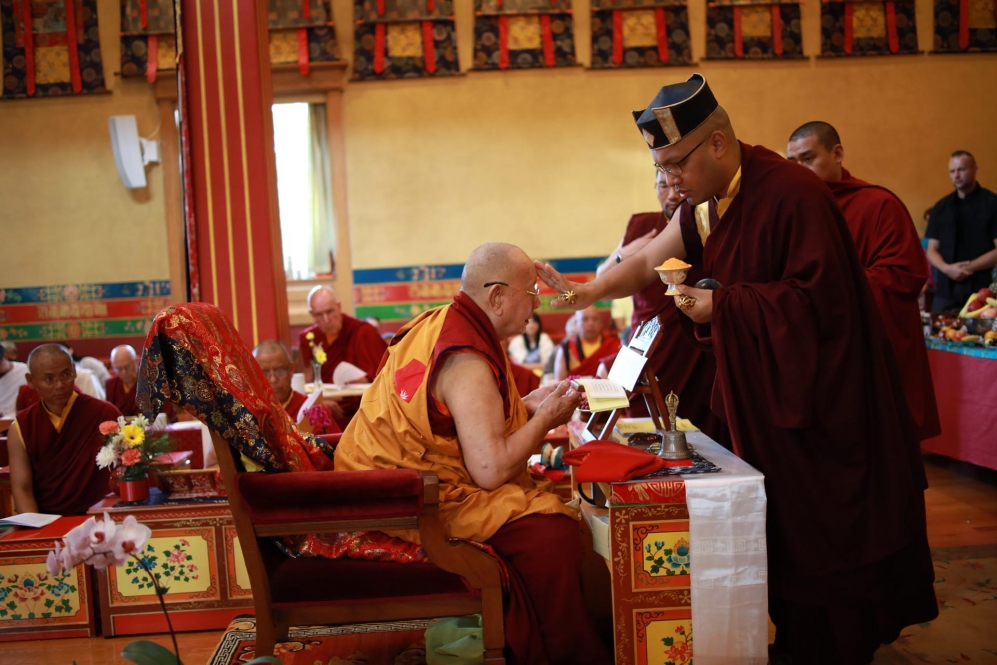
His Holiness Gyalwang Karmapa hands out awards to the honored graduates of the Gopalpur Tibetan Children's Village

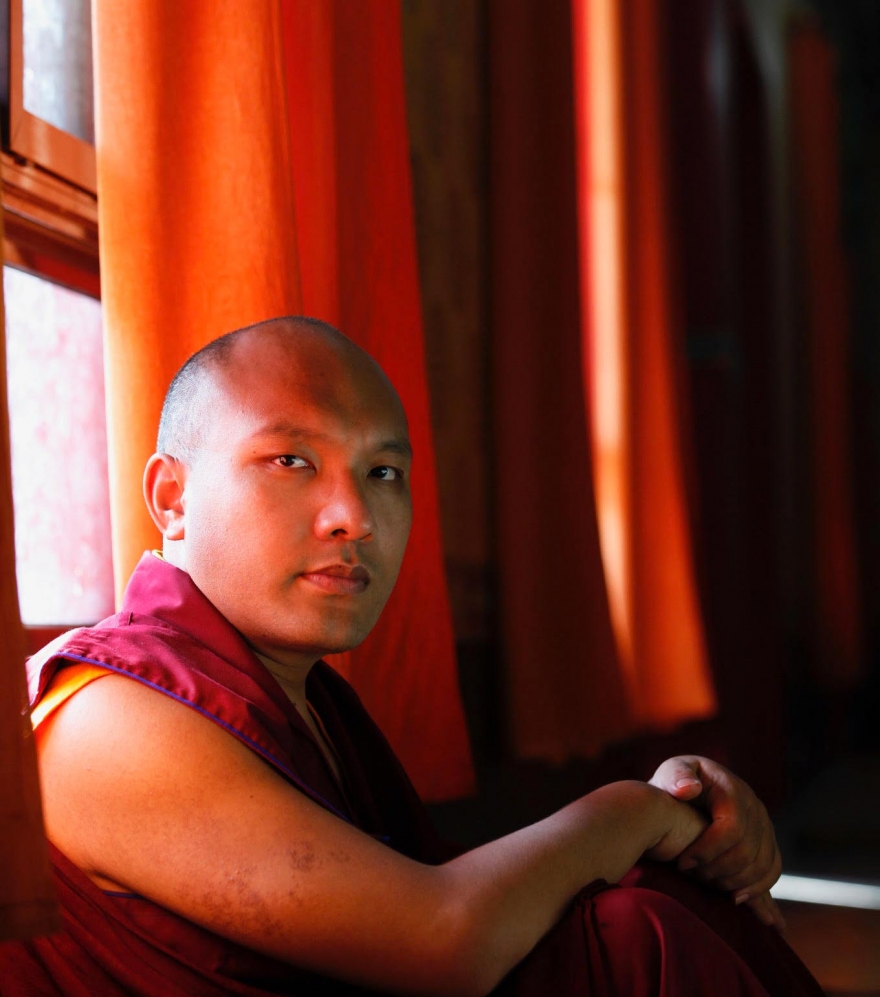
His Holiness Gyalwang Karmapa, from a recent photograph. His Holiness is now 26 years of age (according to the reckoning of the Western calendar system).

Back to top

kagyu office Administrative Structure & Contact Information

The preliminary restructuring of the Office of Administration of the Gyalwang Karmapa has been reviewed. The structure w.e.f 23rd September, 2010 is as follows:

Tsurphu Labrang Dharamshala (Karmapa's office of Administration)

Mailing Address:

Camp: Gyuto Tantric University
P. O. Sidhbari-176 057
Dharamshala, District Kangra (H.P.) INDIA

Tel: +91 1892-235307
Fax: +91 1982-235744

  1. Ven Drupon Rinpoche, General Secretary

  2. Mr. Karma Chugyalpa, Deputy General Secretary
    Cell phone: +91 7602530705
    kargyal@gmail.com

  3. Gompo Tsering,
    Phone: +91 9816045556
    tl.proffice@gmail.com

  4. Karma Tenkyong Wangpo,
    Appointment Secretary (Tibetan)

    tl.info.co@gmail.com

  5. Gyaltsen Sonam, Human Resource Manager

    tl.hrmanager@gmail.com

  6. Karma Thinley Yongdu, Supplies & Procurement Manager
    Tsering Phuntsok
    Phone: +91 9816628697

  7. Chemed Choegyal, Appointment Secretary (English)
    Phone: +91 9816315336
    tl.sy.eng@gmail.com

  8. Mr. Sonam Tsewang, Delhi Branch Office Manager
    Phone: +91 9818943684
    tl.delhioffice@gmail.com

  9. Khenpo Ghawang, Coordinator (Recognizing and Reincarnation and Matters)
    Phone: +91 9434300350
    tl.crrm@gmail.com

  10. Coordinator (Monastery & Dharma Center Matters)

    tl.cmdc2010@gmail.com

  11. Passang Gyalpo, Accounts

    tl.accn@gmail.com

Back to top

kagyu office websites in Chinese and French

Chinese language Website

The Kagyu Office maintains an official Chines-language website for His Holiness Karmapa at www.kagyuoffice.org.tw.

FRENCH LANGUAGE WEBSITE

A French-language version of the website for His Holiness Gyalwang Karmapa has been opened under the auspices of His Holiness Karmapas Office of Administration: www.kagyuoffice-fr.org.


Back to top